




What if we are meant to suffer in life?

Mohamad-Ali Salloum, PharmD • December 13, 2022

Share

  • Slide title

    Write your caption here
    Button
  • Slide title

    Write your caption here
    Button
  • Slide title

    Write your caption here
    Button
  • Slide title

    Write your caption here
    Button

What if we got life wrong? 

We are not meant to enjoy life…

How about, we are meant to enjoy suffering through life?


All our lives, we are told to search for our happiness. But happiness can only be found at the corner, and we are in the circle of life.


Thus, chasing happiness will only lead us to dissatisfaction and being lost.


Even physically, we are not meant to be happy always, otherwise, in excess of dopamine, we will suffer from schizophrenia.


When we are happy, we release serotonin, dopamine, and other molecules. But we don’t have infinite stores of these molecules. They need to be recycled. And thus, we go back to our baseline state or sadness. 


One way to avoid deep sadness is that we need to learn to enjoy the darkness. It will not only make the dark time pass faster, but it will also prevent this dark period from dragging you to the irreversible place; DEPRESSION.


Realizing this concept- enjoying the suffering- is very important as it teaches us that there is always light at the end of the tunnel. The only way to go through it is to acknowledge the feelings and convert the energy to something useful.


If you are angry or sad, go to the gym and channel this energy into lifting and exhaust yourself physically. You will no longer be angry or sad.


Emotions sometimes are deceptive; you don’t have to listen “always” to your emotions.


That's why who depend on motivation to do their work or go to the gym will never get the required results. They lack discipline.


You can always turn the feeling of "suffering or sadness" into something useful. Learn to channel this energy and see how eventually the outcomes will turn for you.


Let me give you a quick example.


I wrote this article while walking on a treadmill in the gym. A couple of hours ago I was feeling down, not knowing the reason why. Nonetheless, I went to the gym and forced myself into movement. Little by little, my mood started shifting from being down to enthusiasm and motivation again to continue working on what I love to do. 


And that’s how ignoring your temporary feelings, in another words "discipline" , can save your day.


Forcing yourself to do things YOU KNOW is good for you- but at the moment you don’t feel like doing- will lead to a positive feedback effect.


If I went to sleep today without doing something that will make me feel good (like going to the gym), this will definitely extend to tomorrow and will ruin tomorrow’s workflow as well.


I went from “why does all this matter” to “f**k yeah, let’s rule the world”.


I hope you got the point I’m trying to say.


Just force yourself to move more.


“Do” in life more than you “think”.


Don’t trust always your temporary feelings, but trust your intuition (which are two separate things) and learn how to enjoy your suffering and turn it into something useful!


Now, excuse me, I m going to run on the treadmill as I’ve never run before.😎


List of Services

    • Slide title

      Write your caption here
      Button
    • Slide title

      Write your caption here
      Button
    • Slide title

      Write your caption here
      Button
    • Slide title

      Write your caption here
      Button

    ABOUT THE AUTHOR

    Mohamad-Ali Salloum, PharmD
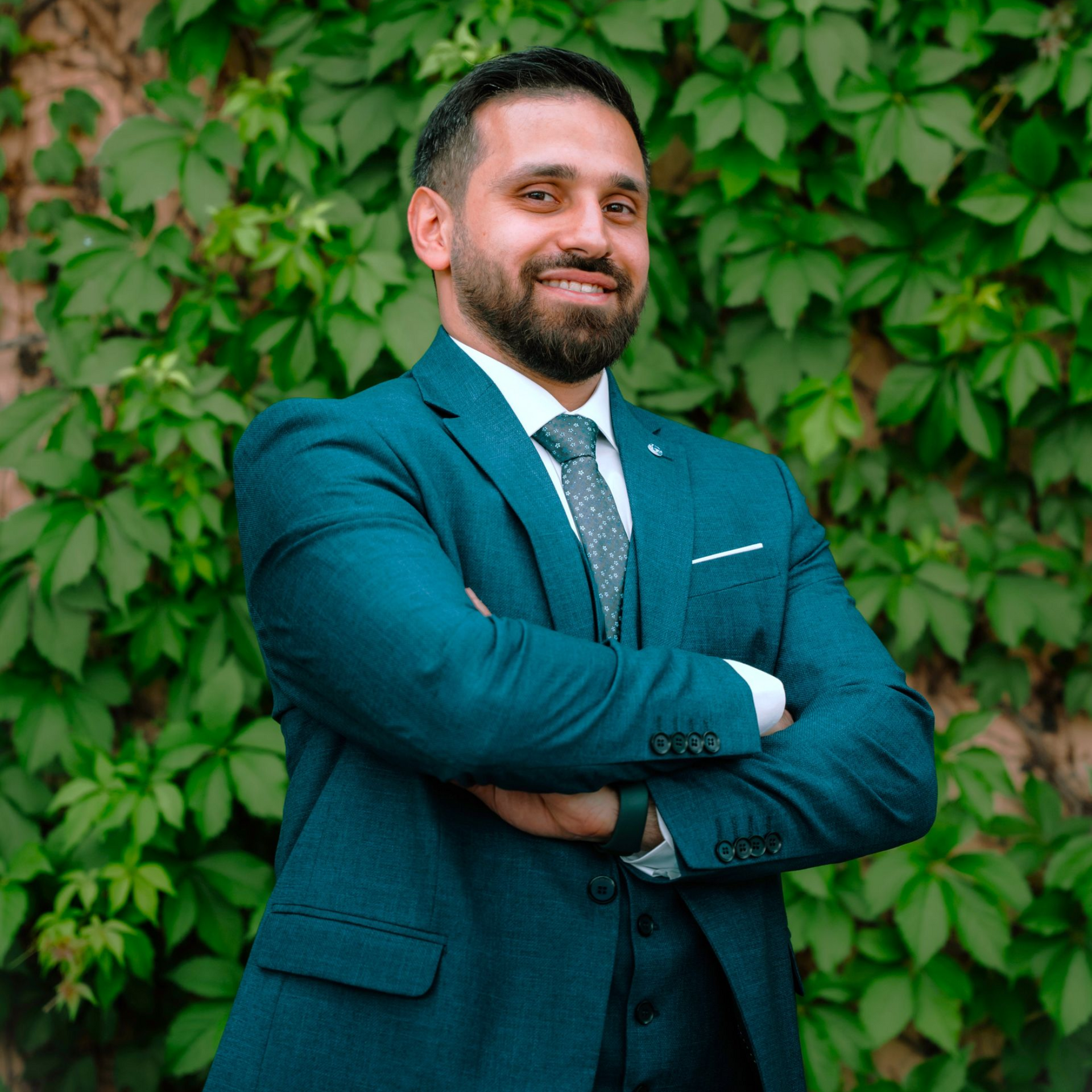
    Mohamad Ali Salloum LinkedIn Profile

    Mohamad-Ali Salloum is a Pharmacist and science writer. He loves simplifying science to the general public and healthcare students through words and illustrations. When he's not working, you can usually find him in the gym, reading a book, or learning a new skill.

    Share

    Recent articles:

    By Mohamad-Ali Salloum, PharmD January 30, 2026
    References: Gooley JJ, Chamberlain K, Smith KA, et al. Exposure to room light before bedtime suppresses melatonin onset and shortens melatonin duration in humans. J Clin Endocrinol Metab. 2011;96(3):E463‑E472. [academic.oup.com] Chang AM, Aeschbach D, Duffy JF, Czeisler CA. Evening use of light‑emitting eReaders negatively affects sleep, circadian timing, and next‑morning alertness. Proc Natl Acad Sci USA. 2015;112(4):1232‑1237. [hms.harvard.edu] Schöllhorn I, Stefani O, Lucas RJ, et al. Melanopic irradiance defines the impact of evening display light on sleep latency, melatonin and alertness. Commun Biol. 2023;6:1090. [nature.com] He J‑W, Tu Z‑H, Xiao L, Su T, Tang Y‑X. Effect of restricting bedtime mobile phone use on sleep, arousal, mood, and working memory: A randomized pilot trial. PLoS One. 2020;15(2):e0228756. [journals.plos.org] Hartstein LE, Mathew GM, Reichenberger DA, et al. The impact of screen use on sleep health across the lifespan: a National Sleep Foundation consensus statement. Sleep Health. 2024;10(4):373‑384. [sleephealt…ournal.org] Höhn C, Hahn MA, Gruber G, et al. Effects of evening smartphone use on sleep and declarative memory consolidation in male adolescents and young adults. Brain Commun. 2024;6(3):fcae173. Finucane E, O’Brien A, Treweek S, et al. Does reading a book in bed make a difference to sleep? The People’s Trial—an online, pragmatic randomized trial. Trials. 2021;22:873. [link.springer.com] Ong JC, Manber R, Segal Z, Xia Y, Shapiro S, Wyatt JK. A randomized controlled trial of mindfulness meditation for chronic insomnia. Sleep. 2014;37(9):1553‑1563. [academic.oup.com] , [mindfulchair.com] He X, Pan B, Ma N, et al. The association of screen time and the risk of sleep outcomes: a systematic review and meta‑analysis. Front Psychiatry. 2025;16:1640263. Shechter A, Quispe KA, Mizhquiri Barbecho JS, et al. Interventions to reduce short‑wavelength light at night and their effects on sleep: systematic review and meta‑analysis. SLEEP Advances. 2020;1(1):zpaa002. [academic.oup.com]
    By Mohamad-Ali Salloum, PharmD January 29, 2026
    References: Harkin B, Webb TL, Chang BPI, Prestwich A, Conner M, Kellar I, et al. Does monitoring goal progress promote goal attainment? A meta-analysis of the experimental evidence. Psychol Bull . 2016;142(2):198–229. Available from: https://www.apa.org/pubs/journals/releases/bul-bul0000025.pdf Compernolle S, DeSmet A, Poppe L, Crombez G, De Bourdeaudhuij I, Cardon G, et al. Effectiveness of interventions using self-monitoring to reduce sedentary behavior in adults: a systematic review and meta-analysis. Int J Behav Nutr Phys Act . 2019;16(1):63. Available from: https://link.springer.com/article/10.1186/s12966-019-0824-3 Patel ML, Brooks TL, Bennett GG. Consistent self‑monitoring in a commercial app‑based intervention for weight loss: results from a randomized trial. J Behav Med . 2020;43:391–401. Available from: https://link.springer.com/article/10.1007/s10865-019-00091-8 Patel ML, Hopkins CM, Brooks TL, Bennett GG. Comparing self-monitoring strategies for weight loss in a smartphone app: randomized controlled trial. JMIR Mhealth Uhealth . 2019;7(2):e12209. Available from: https://mhealth.jmir.org/2019/2/e12209/ Lally P, Van Jaarsveld CHM, Potts HWW, Wardle J. How are habits formed: Modelling habit formation in the real world. Eur J Soc Psychol . 2010;40(6):998–1009. Available from: https://repositorio.ispa.pt/bitstream/10400.12/3364/1/IJSP_998-1009.pdf Singh B, Murphy A, Maher C, Smith AE. Time to form a habit: A systematic review and meta-analysis of health behaviour habit formation and its determinants. Healthcare (Basel) . 2024;12(23):2488. Available from: https://www.mdpi.com/2227-9032/12/23/2488 Gollwitzer PM, Sheeran P. Implementation intentions and goal achievement: A meta‑analysis of effects and processes. In: Advances in Experimental Social Psychology . 2006;38:69–119. Available from: https://www.researchgate.net/publication/37367696 Adriaanse MA, Gollwitzer PM, De Ridder DTD, De Wit JBF, Kroese FM. Breaking habits with implementation intentions: A test of underlying processes. Pers Soc Psychol Bull . 2011;37(4):502–13. Available from: https://dspace.library.uu.nl/bitstream/handle/1874/380229/0146167211399102.pdf Palmer CA, Bower JL, Cho KW, Clementi MA, Lau S, Oosterhoff B, et al. Sleep loss and emotion: A systematic review and meta-analysis of over 50 years of experimental research. Psychol Bull . 2023;149(11):2314–48. Available from: https://www.apa.org/pubs/journals/releases/bul-bul0000410.pdf Kong Y, Yu B, Guan G, Wang Y, He H. Effects of sleep deprivation on sports performance and perceived exertion in athletes and non-athletes: a systematic review and meta-analysis. Front Physiol . 2025;16:1544286. Available from: https://www.frontiersin.org/journals/physiology/articles/10.3389/fphys.2025.1544286/full Tadros M, Newby JM, Li S, Werner‑Seidler A. Psychological treatments to improve sleep quality in university students: systematic review and meta-analysis. PLoS One . 2025;20(2):e0317125. Available from: https://journals.plos.org/plosone/article?id=10.1371/journal.pone.0317125 Locke EA, Latham GP. Building a practically useful theory of goal setting and task motivation: A 35‑year odyssey. Am Psychol . 2002;57(9):705–17. Available from: https://med.stanford.edu/content/dam/sm/s-spire/documents/PD.locke-and-latham-retrospective_Paper.pdf
    By Mohamad-Ali Salloum, PharmD January 16, 2026
    Reference: ACRP. “ICH E6(R2) to ICH E6(R3) Comparison.” (Jan 28, 2025) — terminology & essential records: PDF Clinical Trials Toolkit. “Summary of Key Changes in ICH E6(R3).” (Mar 25, 2025) — proportionality, QbD, safety reporting: Article PharmaEduCenter. “Key changes between ICH GCP E6 R3 and E6 R2.” (Aug 10, 2025) — structure & glossary: Blog CITI Program. “Navigating the Transition from ICH E6(R2) to ICH E6(R3).” (Mar 12, 2025) — consent & site practices: Blog IntuitionLabs. “ICH E6 (R3) Explained.” (Updated Jan 13, 2026) — rationale, data governance: Deep dive
    By Mohamad-Ali Salloum, PharmD January 16, 2026
    By Mohamad-Ali Salloum, PharmD December 6, 2025
    Simplify your day with essentialism: set priorities, eliminate the non‑essential, time‑block deep work, and measure progress for stress‑free productivity.
    By Mohamad-Ali Salloum, PharmD December 6, 2025
    A runner’s guide to VO₂ max: why plateaus happen and how to fix them with long intervals, tempo, hills, cross‑training and smart periodization.
    By Mohamad-Ali Salloum, PharmD December 3, 2025
    Explore the science of cognitive dissonance and learn how attitude change occurs, why dissonance matters, and what recent brain studies reveal about decision-making and self-control.
    By Mohamad-Ali Salloum, PharmD December 3, 2025
    Discover the science behind willpower and impulse control. Explore Dr. David Lewis’s “zombie brain” model, the ego depletion controversy, glucose myths, and evidence-based strategies like the 3-second pause, mindfulness, and environmental design to build lasting self-control.
    By Mohamad-Ali Salloum, PharmD November 16, 2025
    Explore evidence-based insights into ACE inhibitors, calcium channel blockers, and ARBs for hypertension management.
    By Mohamad-Ali Salloum, PharmD November 15, 2025
    Discover the latest scientific evidence (2022–2025) on Branched-Chain Amino Acids (BCAAs)—their role in muscle recovery, performance enhancement, and safety.
    More Posts