







Mohamad-Ali Salloum is a Pharmacist and science writer. He loves simplifying science to the general public and healthcare students through words and illustrations. When he's not working, you can usually find him in the gym, reading a book, or learning a new skill.
Article 7 — Recovery Part 1: The Science of Rest (and Why You’re Doing It Wrong)
Mohamad-Ali Salloum, PharmD • July 20, 2026
Share
Let me ask you something simple:
Have you ever taken a full weekend off… and still felt exhausted on Monday?
If your answer is yes, then you're not broken.
You've just been taught the wrong definition of rest.
Because here's the truth:
👉 Most people don't actually recover.
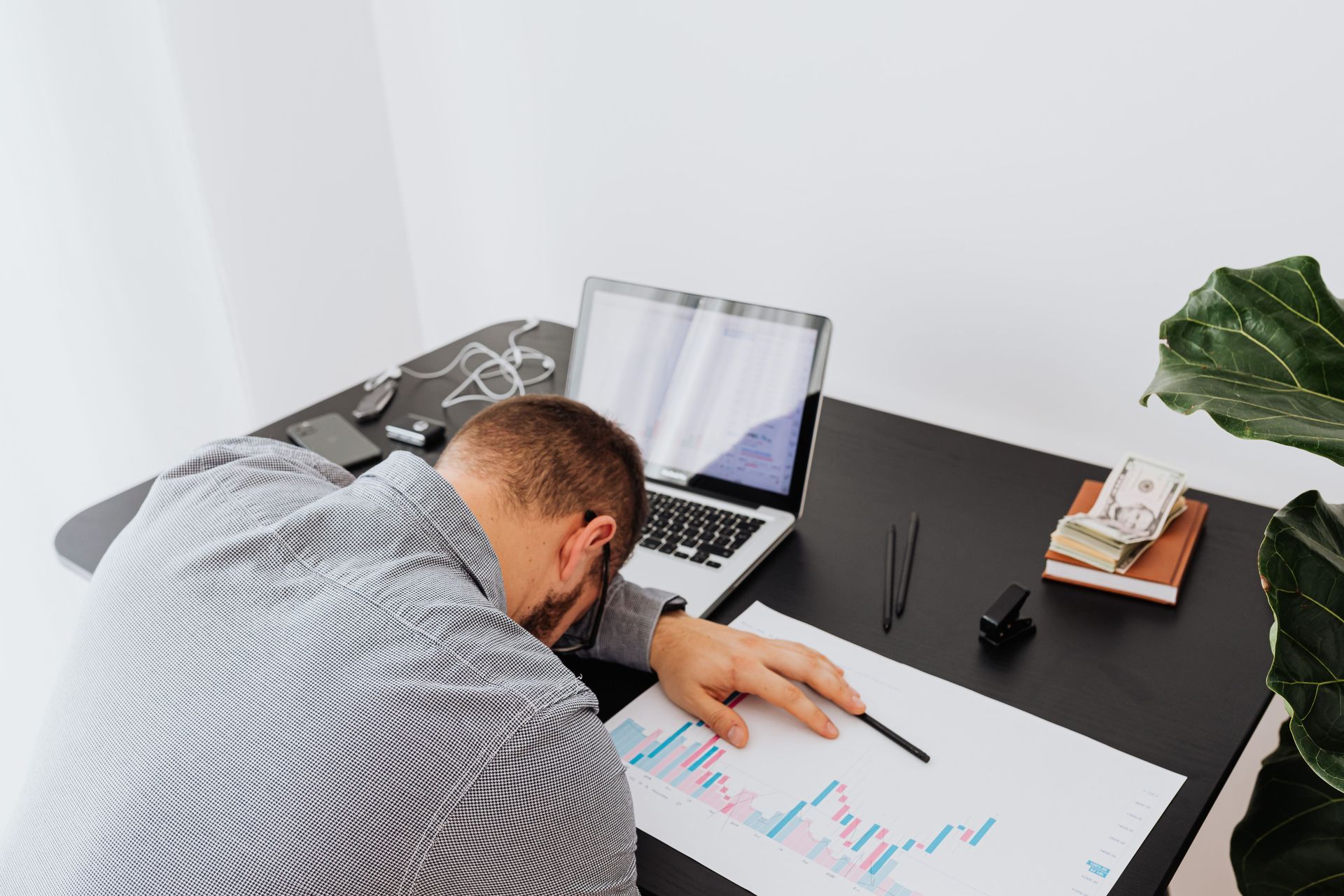
They just pause work… and keep their brain running.
They just pause work… and keep their brain running.
Let's fix that.
🔹 1. Passive vs Active Rest: Why “Doing Nothing” Isn’t Working
When people say “I need rest,” they usually mean:
- “I'll lie down”
- “I'll watch something”
- “I'll just do nothing”
Sounds logical, right?
But here's the problem: your body doesn't recover just because you stopped moving.
🧠 Think of it Like This
Imagine your phone is overheating.
- Passive rest= turning the screen off
- Active rest= actually letting it cool down, closing apps, resetting processes
Your brain works the same way.
✅ Passive Rest
(What we think is enough)
- Watching Netflix
- Sleeping in randomly
- Sitting on your phone
👉 Useful… but often incomplete.
✅ Active Rest
(What science suggests you need)
- Going for a walk
- Light exercise
- Talking to someone you trust
- Sitting in quiet (no stimulation)
Why?
Because real recovery means switching your nervous system out of “stress mode” and into “recovery mode.”
🎯 Example
You come home exhausted.
You collapse onto the couch → open Netflix → scroll your phone at the same time.
Physically? You're resting.
Mentally? You're overstimulated.
👉 That's not recovery. That's disguised activity.
You come home exhausted.
You collapse onto the couch → open Netflix → scroll your phone at the same time.
Physically? You're resting.
Mentally? You're overstimulated.
👉 That's not recovery. That's disguised activity.
🔹 2. Why Scrolling Feels Like Rest (But Isn't)
Let's talk about the biggest trap:
👉 “I'll just scroll a bit to relax.”
We've all said it.
But what actually happens?
🧠 Every Scroll Gives Your Brain:
- New information
- Emotional reactions
- Comparisons
- Micro dopamine hits
Instead of calming your brain, this keeps it alert and engaged.
Your brain never gets the signal:
👉 “You're safe, you can switch off now.”
📊 What Research Shows
- Social media breaks don't fully restore mental energy.
- Constant digital stimulation is linked to fatigue and poor focus.
🎯 Real-Life Moment
You pick up your phone for “5 minutes.”
You put it down 40 minutes later and feel:
You pick up your phone for “5 minutes.”
You put it down 40 minutes later and feel:
- Mentally tired
- Slightly anxious
- Not refreshed at all
🔹 3. Sleep (You're Doing This Wrong Too)
Let's be honest:
Most people think sleep = “turning off.”
But biologically?
👉 Sleep is one of the most active repair processes in your body.
🧠 While You Sleep, Your Body:
- Refills your energy stores
- Repairs tissues and systems
- Organizes memories and learning
🔄 And It Happens in Cycles
Every night, your brain goes through repeated 90-minute cycles:
Deep Sleep
🛠 Physical Recovery
REM Sleep
🧠 Mental & Emotional Reset
🎯 Simple Analogy
Think of sleep like a factory night shift:
👉 The work doesn't get done.
Think of sleep like a factory night shift:
- Deep sleep= maintenance crew fixing damage
- REM sleep= IT team reorganizing data
👉 The work doesn't get done.
⚠️ Why This Matters
You can sleep 8 hours...
...but if the quality is poor?
👉 You'll still wake up exhausted.
You can sleep 8 hours...
...but if the quality is poor?
👉 You'll still wake up exhausted.
🔹 4. Your Brain Has Built-In Energy Cycles (And You Ignore Them)
Here's something most people don't realize:
👉 You're not built to be focused all day.
Your brain runs on ultradian rhythms—basically 90-minute energy waves.
🧠 What That Looks Like:
60–90 minutes → Deep focus
⬇
Natural dip → Fatigue, distraction, slower thinking
This pattern is part of something called the Basic Rest–Activity Cycle (BRAC).
🎯 Example
You sit to work and say:
“I'll power through 4 hours straight.”
Reality:
That's biology.
You sit to work and say:
“I'll power through 4 hours straight.”
Reality:
- Hour 1 → productive
- Hour 2 → okay
- Hour 3 → rereading the same line
- Hour 4 → completely drained
That's biology.
Research shows performance drops when you ignore these cycles.
💡 The Key Idea
Your brain is telling you:
“I need recovery now.”
And instead, we respond with:
“One more task, one more email, one more push.”
That's how burnout builds.
Your brain is telling you:
“I need recovery now.”
And instead, we respond with:
“One more task, one more email, one more push.”
That's how burnout builds.
🔹 5. Why a Weekend Off Doesn't Fix Burnout
Now the big one.
❗ The Belief:
“I'll just rest this weekend and reset.”
“I'll just rest this weekend and reset.”
❗ The Reality:
It almost never works.
It almost never works.
Why?
Because burnout isn't just “being tired.”
It's:
- Chronic stress overload
- Nervous system imbalance
- Long-term depletion
According to the effort–recovery model, real recovery takes time and requires full disengagement—not just short breaks.
🎯 Example
You work nonstop for months.
Then:
Why?
You work nonstop for months.
Then:
- Saturday → sleep late + scroll
- Sunday → Netflix + thinking about Monday
Why?
- Your brain never fully switched off
- Your stress system stayed active
- Your “rest” wasn't true recovery
✅ So What Is Real Rest?
Let's simplify everything into one powerful idea:
👉 Rest is not about stopping work.
It's about changing your brain state.
It's about changing your brain state.
✅ Real Recovery Includes:
- Mental detachment (you're not thinking about work)
- Low stimulation (not constant input)
- Respecting energy cycles
- High-quality sleep
🔥 The Shift That Changes Everything
Stop asking:
“Did I rest?”
Start asking:
“Did my brain actually recover?”
Because here's the truth:
👉 Burnout doesn't come from working hard.
👉 It comes from not recovering properly.
🧠 Recovery Quiz
Test how much you remember from this article.
References:
- Patel AK, Reddy V, Shumway KR, et al. Physiology, Sleep Stages. StatPearls Publishing; 2024. [ncbi.nlm.nih.gov]
- National Heart, Lung, and Blood Institute. How Sleep Works: Sleep Phases and Stages. 2022. [nhlbi.nih.gov]
- Cleveland Clinic. Sleep: What It Is, Why It’s Important, Stages. 2023. [my.clevela...clinic.org]
- Ruhl C. 5 Stages of Sleep. Simply Psychology; 2026. [simplypsychology.org]
- Lvov M. Ultradian Rhythms Explained. 2026. [exoplan.io]
- Mishra P. Ultradian Rhythms and Work Cycles. 2026. [get-alfred.ai]
- Team Psychology. Burnout Recovery: Why a Weekend Off Isn’t Enough. 2026. [formalpsychology.com]
- Grimm A. The Recovery Myth. 2026. [linkedin.com]
- Nature Scientific Reports. Social media microbreaks study. 2024. [nature.com]
- Fisher SP. Digital Burnout and Depression. 2026. [nurtured-well.com]
- Narayanan N. Social media burnout and fatigue. 2026. [medindia.net]
List of Services
ABOUT THE AUTHOR
Mohamad-Ali Salloum, PharmD
Share
Recent articles:

Discover how busy professionals can optimize their home office to support physical activity, reduce prolonged sitting, boost productivity, and improve long-term health using evidence-based strategies, movement-friendly workspace design, exercise snacks, walking meetings, and practical fitness habits.
Discover the neuroscience of impulse control and how mindfulness can help you pause before reacting. Learn how a small break can reduce impulsive decisions, strengthen self-control, and improve emotional regulation using evidence-based psychological strategies.
th, time management, and a strong identity beyond work. Discover practical strategies to prevent burnout and create sustainable long-term well-being.
Discover how boundaries, autonomy, workload control, and digital disconnection reduce stress, improve recovery, and prevent burnout.
Learn how to recover from burnout by rewiring your brain and nervous system. Discover science-backed techniques including breathwork, mindfulness, exercise, cognitive restructuring, psychological flexibility, and motivation rebuilding.
Burnout is more than stress. Learn how chronic burnout impacts mental health, heart health, immunity, cognition, and overall well-being.
Burnout doesn’t happen overnight. Learn the early warning signs—mental, physical, and behavioral—so you can catch burnout before it takes control.
Feeling exhausted but work isn’t the problem? Learn how life burnout happens and why your daily responsibilities may be draining you.
Think burnout is just stress? Discover how your thoughts, habits, and mindset may be silently driving your exhaustion.
Why do you feel tired but wired? Explore the science of burnout, from cortisol imbalance and HPA axis dysfunction to brain and nervous system changes caused by chronic stress.