
Pharmacologie

par Mohamad-Ali Salloum, PharmD 8 mars 2026
A clear, engaging walkthrough of fentanyl’s pharmacokinetics and pharmacodynamics—from administration to metabolism and excretion—designed for pharmacy and medical students, with visuals, summaries, and an interactive quiz.
par Mohamad-Ali Salloum, PharmD 8 mars 2026
Understand Aspirin easily with this blog post.
par Mohamad-Ali Salloum, PharmD 7 mars 2026
Learn about Buprenorphine, the strong gripper, but weak pusher 😅
par Mohamad-Ali Salloum, PharmD 7 mars 2026
References : American Chemical Society. Tramadol – Molecule of the Week Archive. December 16, 2014. [acs.org] DEA Diversion Control Division. Tramadol Drug & Chemical Evaluation Section Report. April 2025. [deadiversi....usdoj.gov] Grond S, Sablotzki A. Clinical pharmacology of tramadol. Clin Pharmacokinet. 2004;43(13):879‑923. [go.drugbank.com] Food and Drug Administration (FDA). ULTRAM® (tramadol hydrochloride) tablets label. 2004. [accessdata.fda.gov] Nickson C. Tramadol – CCC Pharmacology. Life in the Fast Lane ; 2024. [litfl.com] DrugBank Online. Tramadol: Uses, Interactions, Mechanism of Action. DB00193. [go.drugbank.com] Food and Drug Administration (FDA). Tramadol Hydrochloride Tablets (DailyMed). 2023. [dailymed.nlm.nih.gov] Dean L. Tramadol Therapy and CYP2D6 Genotype. Medical Genetics Summaries . 2015. [ncbi.nlm.nih.gov] Food and Drug Administration (FDA). Tramadol ER Capsules Label Information. 2010. [accessdata.fda.gov] EBM Consult. Mechanism for Tramadol‑Induced Serotonin Syndrome in Patients Taking SSRIs. 2017. Medsafe Pharmacovigilance. Serious Reactions with Tramadol: Seizures and Serotonin Syndrome. 2007. Hassamal S, Miotto K, Dale W, Danovitch I. Tramadol: Understanding the Risk of Serotonin Syndrome and Seizures. Am J Med. 2018;131(11):1382.e1–6. Medscape Reference. Ultram, ConZip (tramadol) dosing, indications, interactions. 2026.

par Mohamad-Ali Salloum, PharmD 2 septembre 2024
The U.S. Food and Drug Administration (FDA) plays a crucial role in ensuring the safety and efficacy of medications. Despite rigorous testing, some drugs are recalled post-approval due to unforeseen adverse effects. This essay explores ten such medications, detailing the reasons behind their recalls.

par Mohamad-Ali Salloum, PharmD 17 août 2024
Anaphylaxis is a severe, life-threatening allergic reaction that can occur rapidly, requiring immediate medical intervention. Traditionally, epinephrine autoinjectors have been the standard of care for such emergencies. However, the recent approval by the U.S. Food and Drug Administration (FDA) of a novel nasal spray, named neffy, marks a significant milestone in the management of anaphylactic reactions

Genes and pharmacogenomics
par Mohamad-Ali Salloum, PharmD 9 décembre 2023
Understanding Pharmacogenomics: The world of pharmacology is continually evolving, and one of the most exciting frontiers is Pharmacogenomics. Usually, we treat patients based on their clinical characteristics. But with pharmacogenomics, we take into consideration the genetic variability of drug metabolism and response within each person. This allows us to exactly treat what the patient is suffering from, and at the same time reduce some of the unwanted side effects in some cases.
par Mohamad Ali Salloum, PharmD 11 juillet 2022
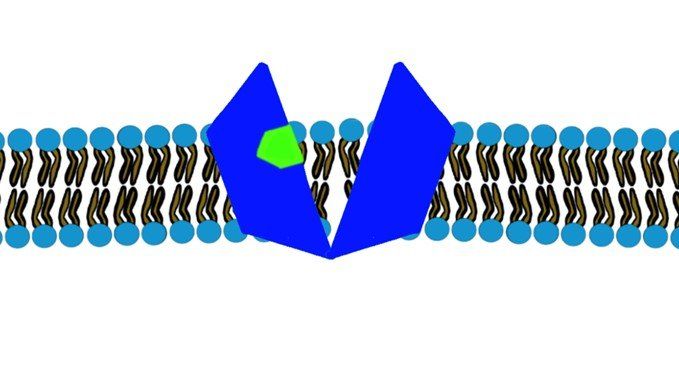
Have you ever wondered how medicines reach their target? For example, how paracetamol goes from the guts in the digestive system to the brain passing through a lot of membranes and which are considered intact and impermeable to a lot of substances. Or how does oxygen pass from the air in the lungs into our bloodstream and then finally into the tissues and cells? One keyword can answer these questions: Transporters, ...well actually sometimes it doesn’t require a transporter. To know how this happens, First, let’s discuss the membranes. Cell membranes have two key characteristics: 1) Semi-permeability , where only certain materials may freely cross – large and charged substances are typically blocked. 2) Selectivity , where membrane proteins regulate the passage of material that cannot freely cross. These membrane proteins are called transporters. Thus, the passage of molecules and substances across a biological membrane may occur either passively or actively. 1) Passive Transport This type of transport is the most common mechanism of absorption for drugs. It is the passage of molecules from a high concentration location to a low concentration location (along the concentration gradient). This is just simply how nature works. And this happens so easily that it does not need the energy to do it. Thus, NO ATP hydrolysis is required. And that’s why it’s called “passive”. OKAY, Mohamad-Ali…. we now understand that no energy is needed, but how do molecules go from one side to another? a) Simple diffusion: Since the core of the cellular membrane is lipophilic (Figure.1), thus, any lipophilic molecule (like ciprofloxacin) will have no problem just diffusing through the membrane without any effort. The same happens with very small molecules like O 2 and CO 2.
par Mohamad Ali Salloum, PharmD 22 mai 2022
Taking a lot of medications can confuse the patients over time since they might not remember if they took the drug today or not. Not to mention that a lot of these patients are from the elderly population. David P. Wagner received his patent for inventing the pill organizer on 4 Aug 1964 . The reason he had this idea is that his wife was forgetting if she had already taken her medications. This invention helped a lot of patients to remember taking their medications on time every day but the question we are asking today is that “Are they safe?” Studies on Medication organization devices (MODs) are of poor quality, and the relationship between adherence and health outcomes is unclear. (2) Heat, air, light, and moisture may impact the effectiveness and safety of a medicine. The original container is designed to protect the medicine from these elements. (3)Some medicines cannot be repacked and must be stored in the original container until it is time for the patient to take them. (3) A study done in 2013 showed that the use of the organizers for storing and carrying tablets and capsules exposes these medications to environmental factors from which their original packaging protected them, compromising their stability and safeness. (1) Older people who switch to using pill organizers could experience adverse effects and even hospitalization -according to research from the University of East Anglia. New research reveals that people who switch from usual medication packaging to a pill organizer are more likely to become unwell than those not using them. When these patients were switched to a pill organizer and suddenly started taking more of their prescribed medication than previously, they experienced normal side effects of the medication." (2) In Conclusion, the research team says that patients should consult their General Physician or Pharmacist before switching to a pill organizer.
par Mohamad Ali Salloum, PharmD 9 mai 2022
Pharmacology is the study of medications, and it is divided into two major branches: - Pharmacodynamics: How medications affect our body. - Pharmacokinetics: How our body affects the medications. It can be also branched into many other sub-branches (pharmaco-toxicology, pharmacogenomics, pharmacogenetics, pharmacognosy, pharmaco-economics…..). At the first glance, it may seem a very hard subject to study, especially when you see the daunting amount of medications that we have to memorize and know their details. When you start studying it, you will realize it is really hard..no cap. During my collage days, I realized this early on and wanted to master this hellish subject and pass it. The advantage of studying from the below references is that you will master pharmacology. The downside is that IT TAKES A LOT OF TIME. Here is a list of the references that helped me to understand this subject. 1) Bertram G. Katzung, Marieke Kruidering-Hall, Anthony J. Trevor - Katzung & Trevor’s Pharmacology Examination and Board Review-McGraw-Hill Education (Edition 13) In my opinion this is the reference that every healthcare professional (HCP) should start from when studying pharmacology. What makes it special is that it is not too much detailed and at the same time it’s not too much briefed. This will help you to understand Pharmacology without going too deep where a beginner might get confused. 2) Symptoms in the Pharmacy A Guide to the Management of Common Illnesses by Alison Blenkinsopp , Martin Duerden , John Blenkinsopp This reference is the one you should go for when doing the internship in the community pharmacy. It’s important to do it during the internship since you will be able to associate the cases you are observing in the pharmacy with the information you are studying in the reference. This will allow you to memorize the information for longer time. 3) Case files. pharmacology by Toy, Eugene C. This reference contains 56 clinical cases with USMLE-style questions. It will explain pharmacology briefly and will make you revise the chapters that you’ve studied in the previous references and highlight on the main points. It will teach you how to approach clinical problems. 4) Pharmacotherapy Handbook, Eleventh Edition 11th Edition by Terry Schwinghammer In the previous three references you were studying pharmacology per drug class (opioids, analgesics, anti-inflammatory medications...). In the pharmacotherapy handbook you will understand the management of every disease and what drug what medications to give and WHY. This reference will talk about a disease and how you will manage it with the most recently approved therapies. While studying you will realize that this handbook is rich in valuable clinical information. 5) Farideh Javid, Janice McCurrie - Clinical Physiology and Pharmacology_ The Essentials (2009, Wiley) This reference will fill the gaps that were formed in your brain when you were studying pharmacology from the previous references. It will help the student to put the facts that he/she learned before into the deep memory. Testing your knowledge when solving clinical case studies will make you do connections between several chapters because a case study will describe a patient that has several comorbidities and that is taking medications from several classes. This will expose the students brain to more complex situations. 6) Goodman & Gilman Edition 13 This reference is literally a heaven of Information for health care professionals . It will provide you with everything you need to know about Pharmacology from A to Z. However, I don’t recommend to starting studying from it because it will confuse you more than it can benefit you. This reference is more recommended for healthcare professionals that want to go into depth in the chapters.
Show More